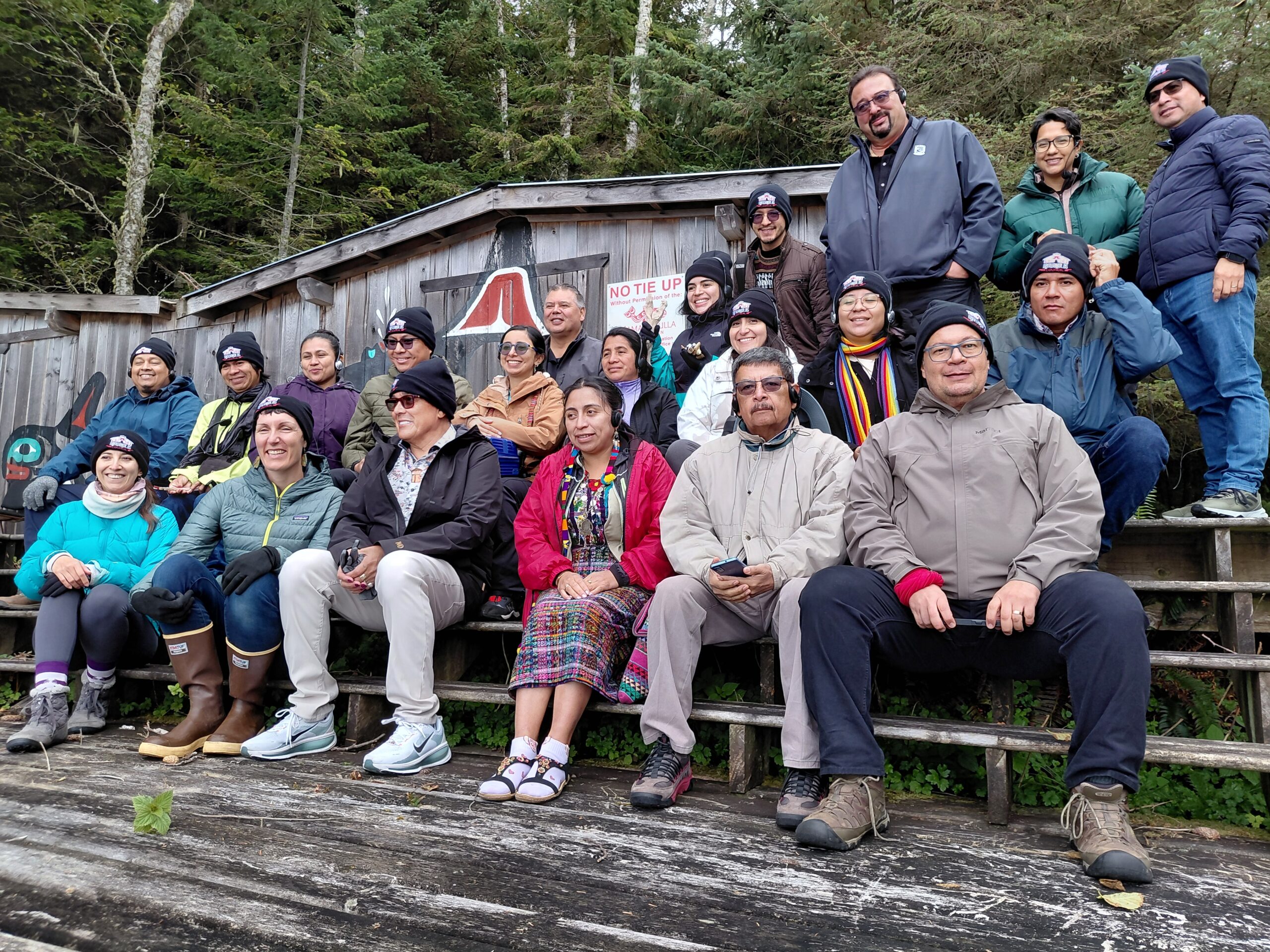
“Indigenous Peoples all over the world are under the same pressure and have the same plight of their territories being desecrated, destroyed: their sea life, their land animals, their sky animals. Whether it’s Mamalilikulla here or the Guatemalans where they live, our job is to take care of the land. We can’t live without our connections.”
—Winidi John Powell, elected Chief Councillor, Mamalilikulla First Nation
“We have a lot in common. As Indigenous Peoples, we take care of our territory and we guard our territory, always.”
—Antonia Xuruc, Community Environmental System Director of
Asociación de Cooperación para el Desarrollo Rural de Occidente CDRO
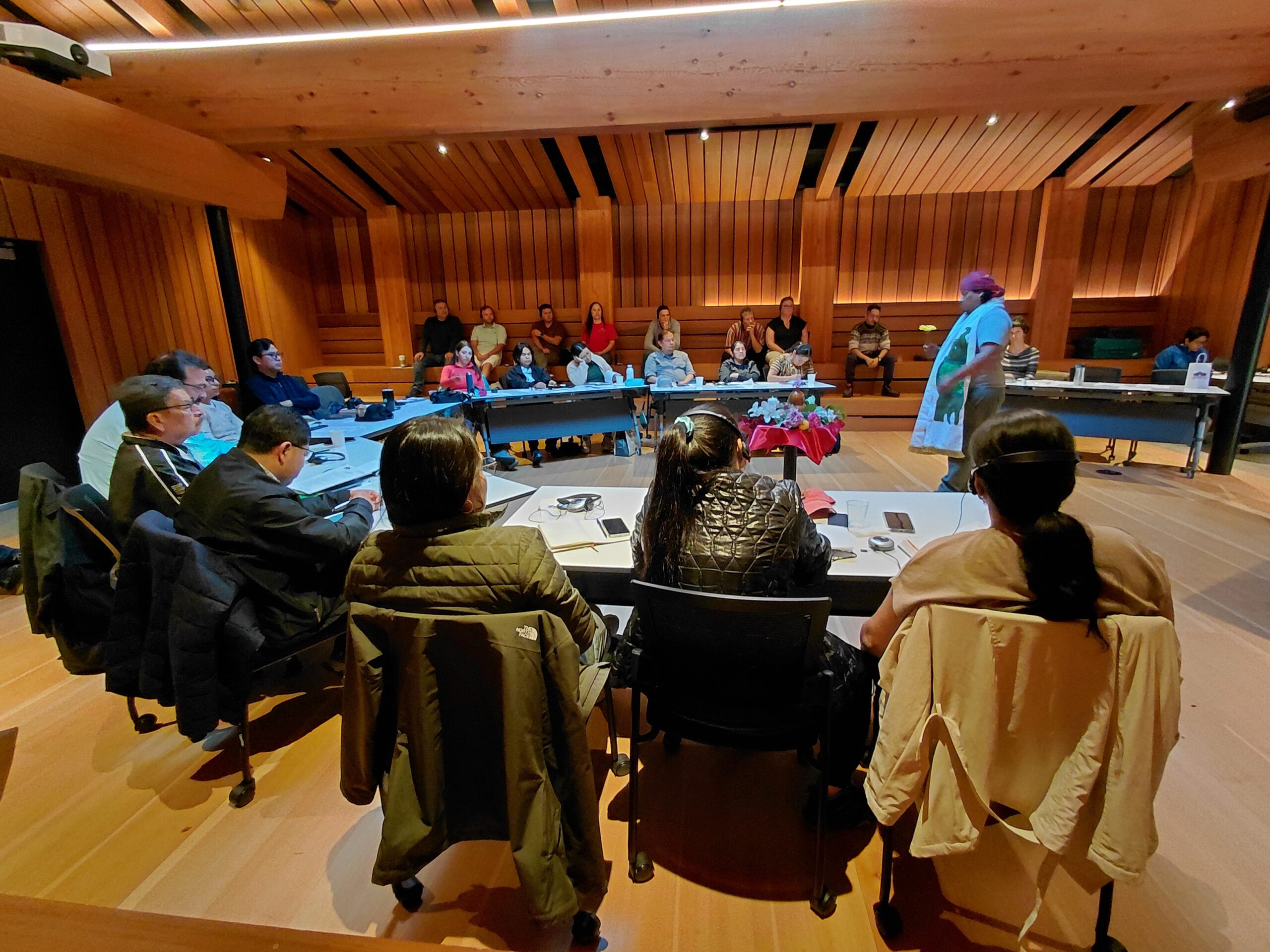
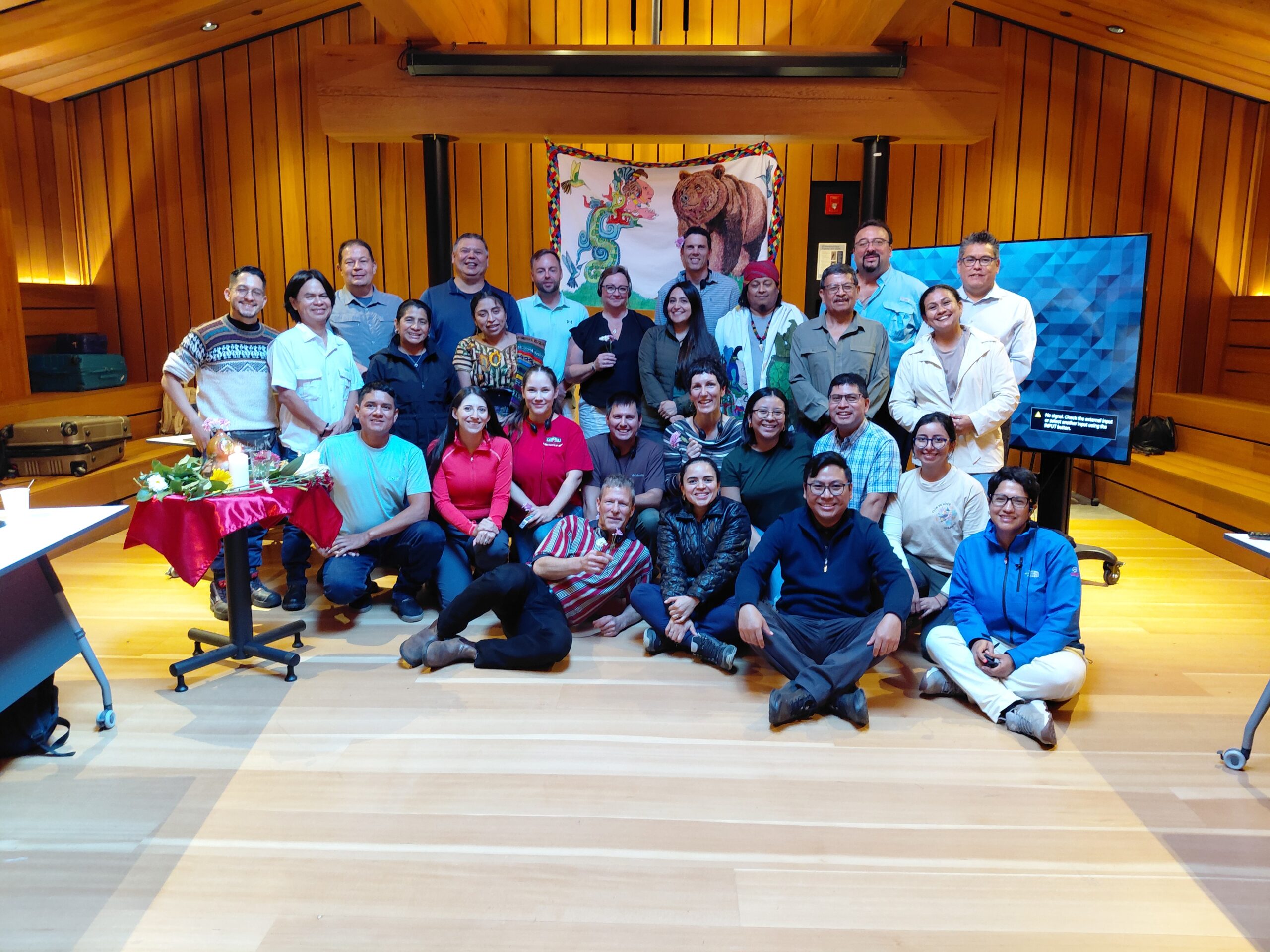
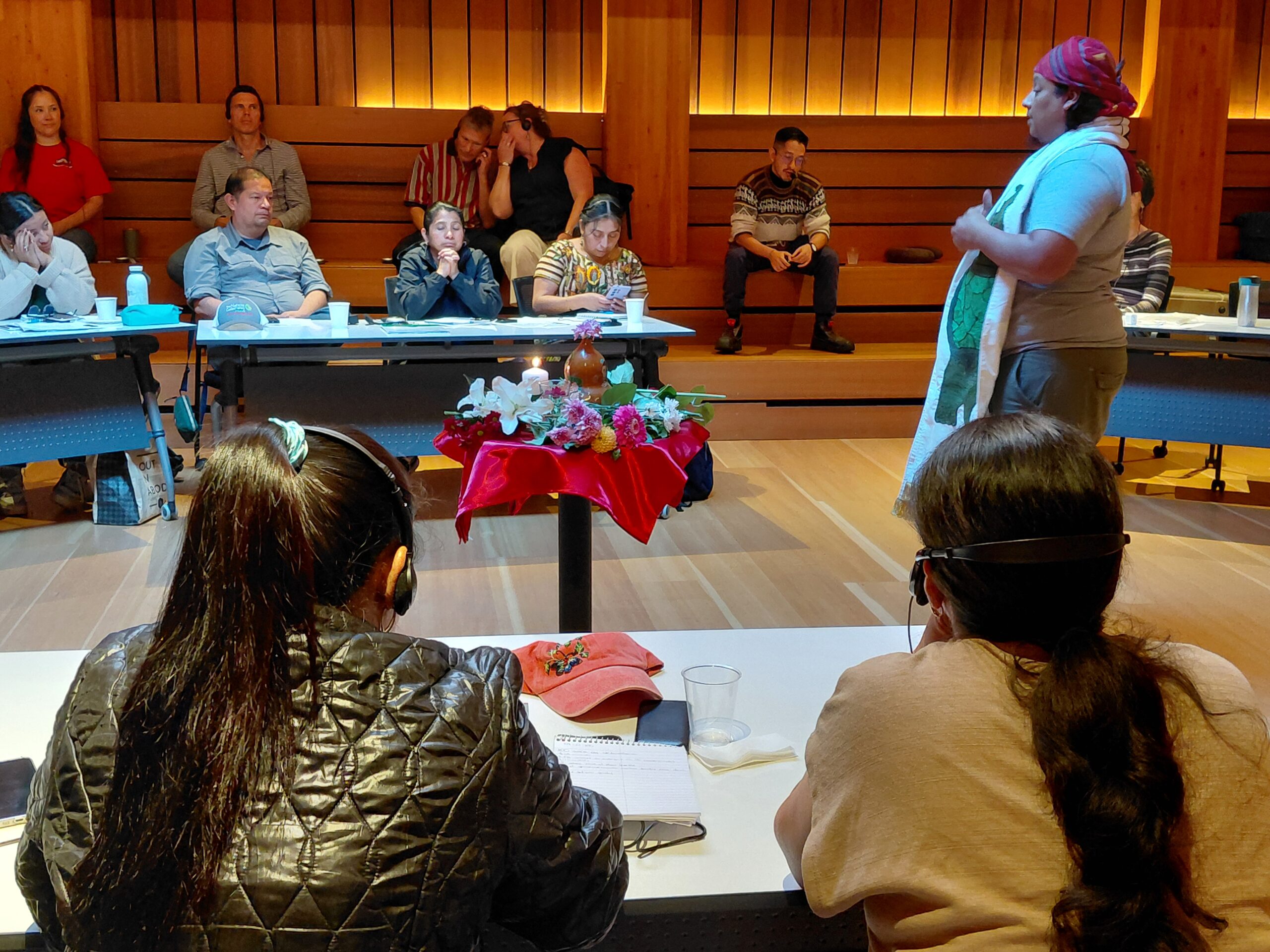
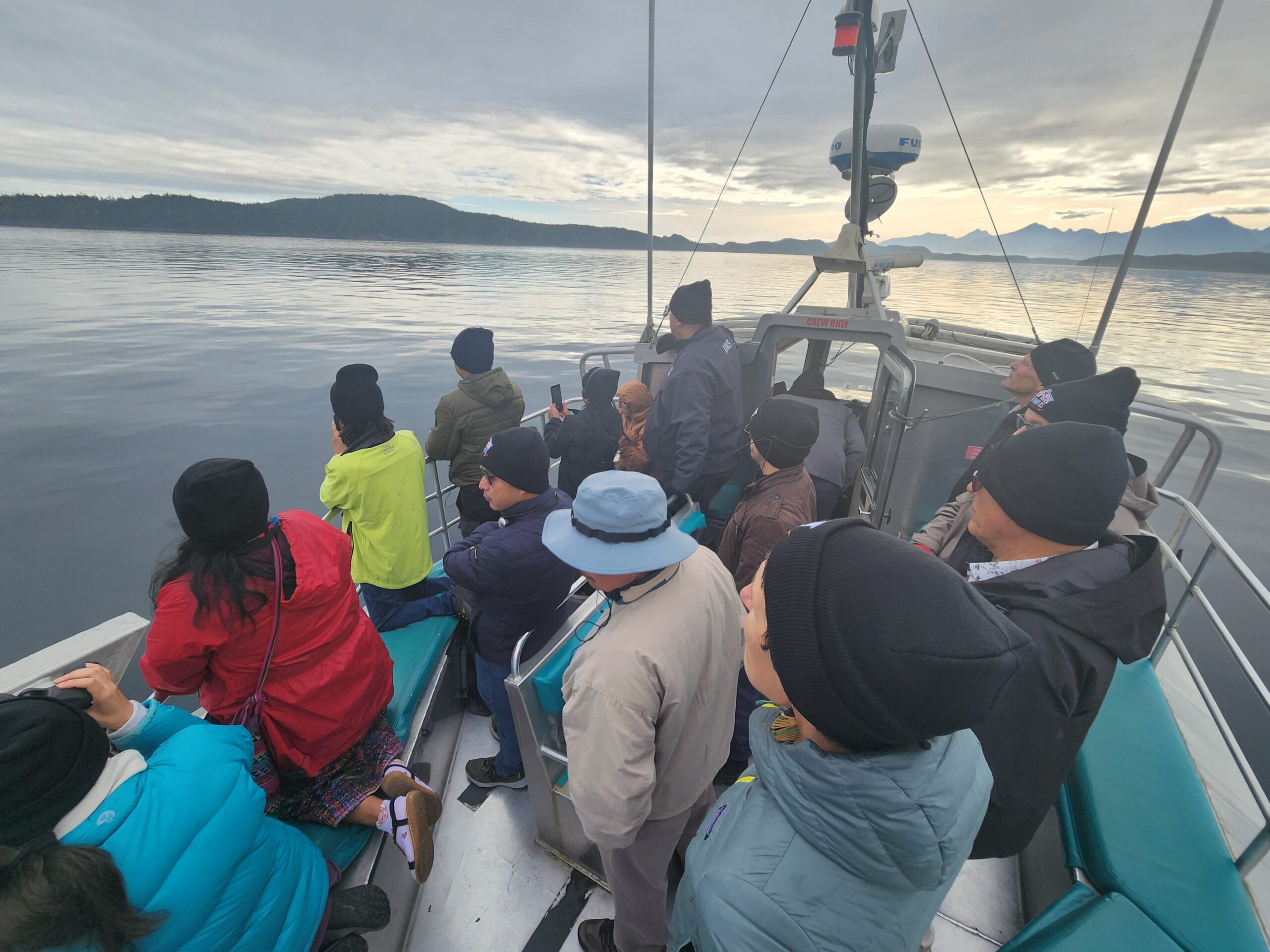
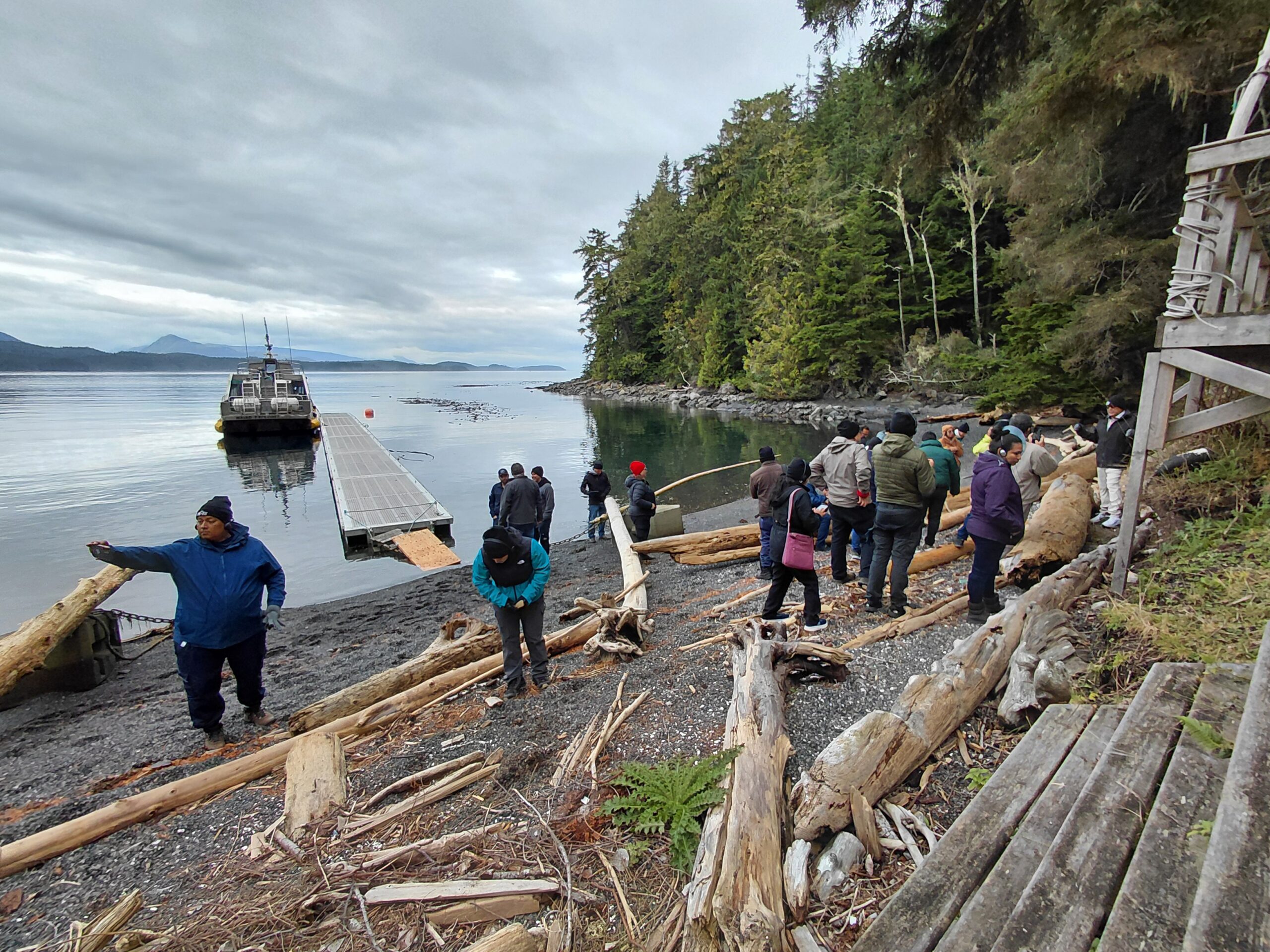
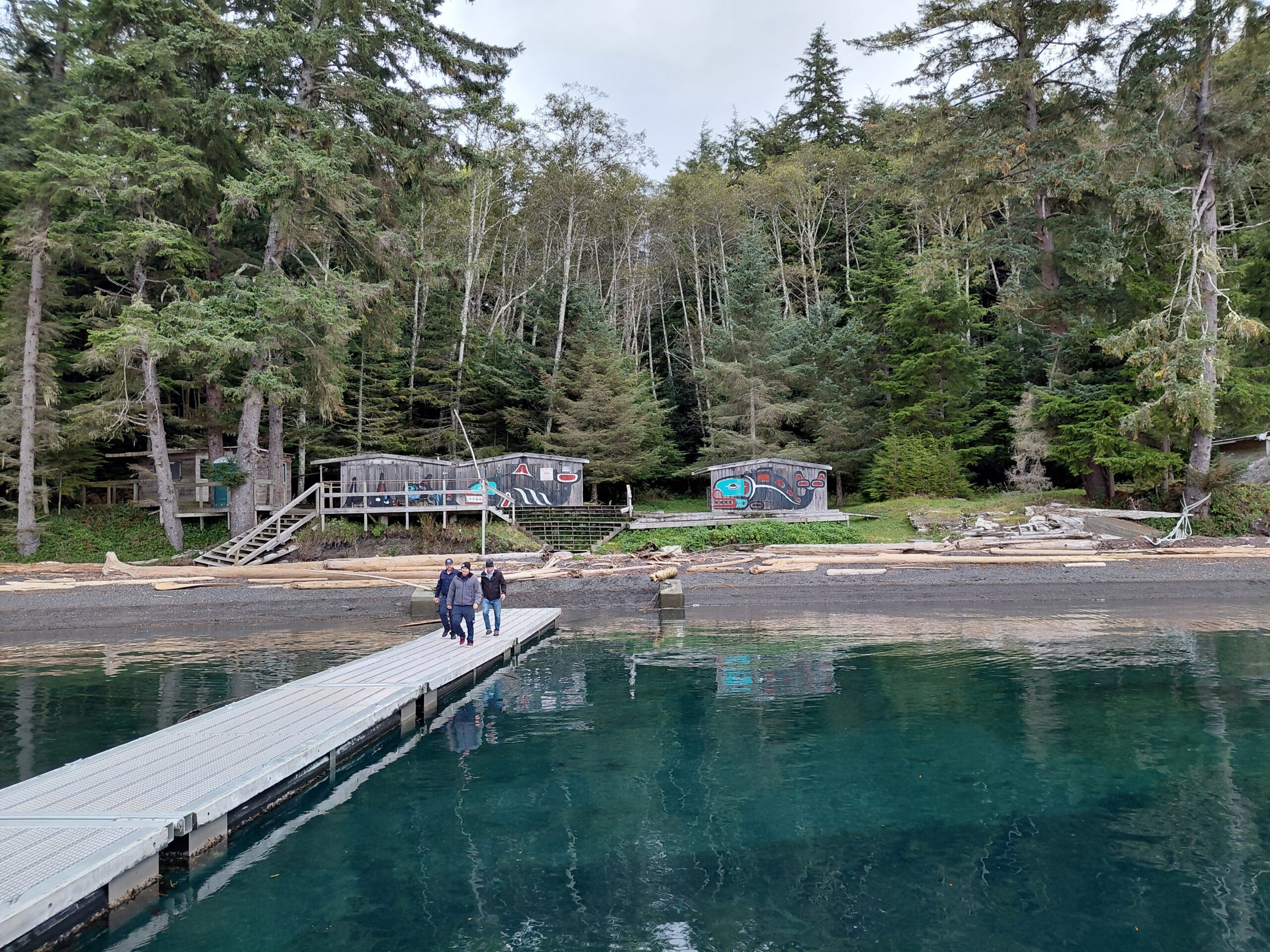
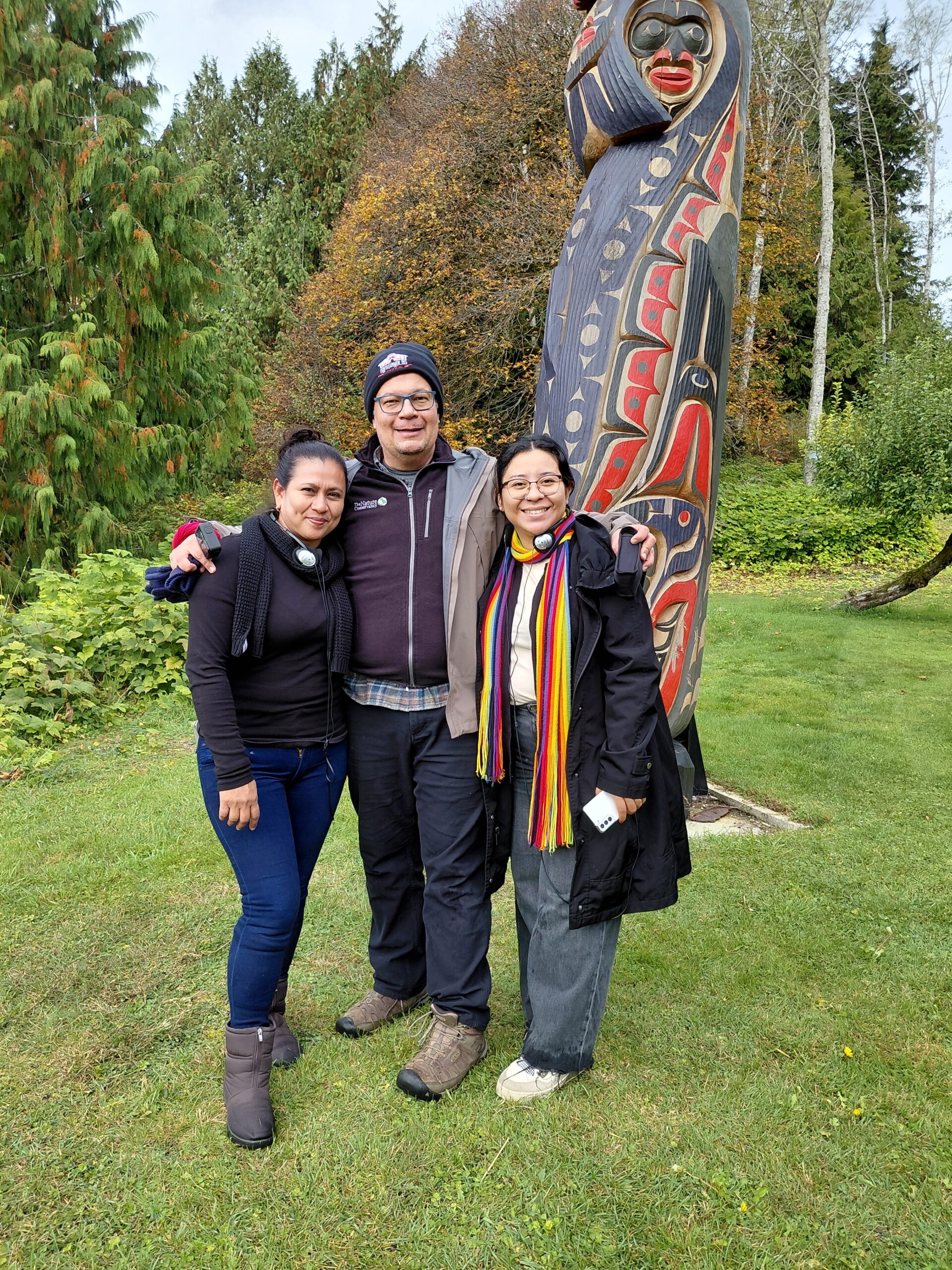
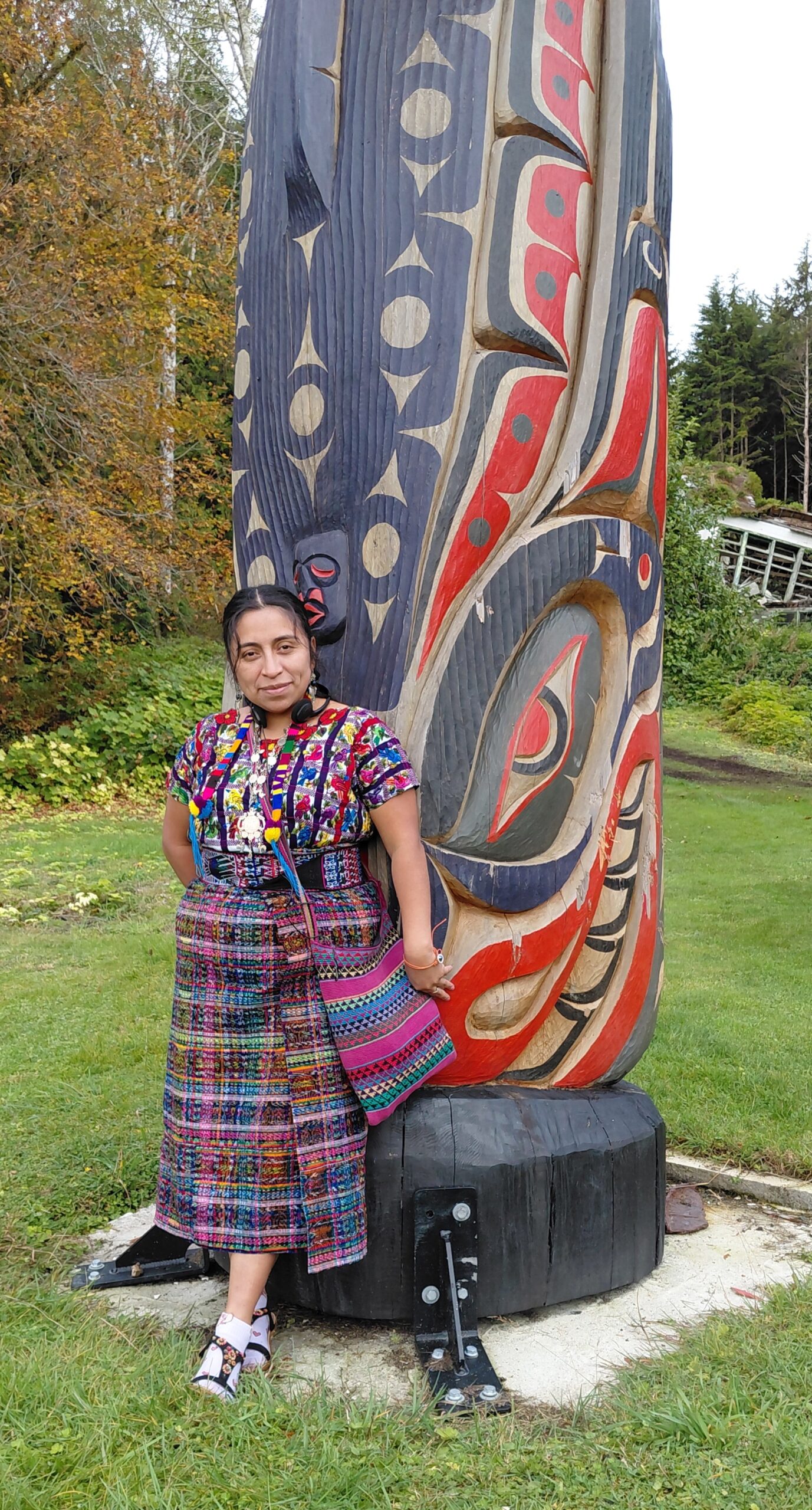
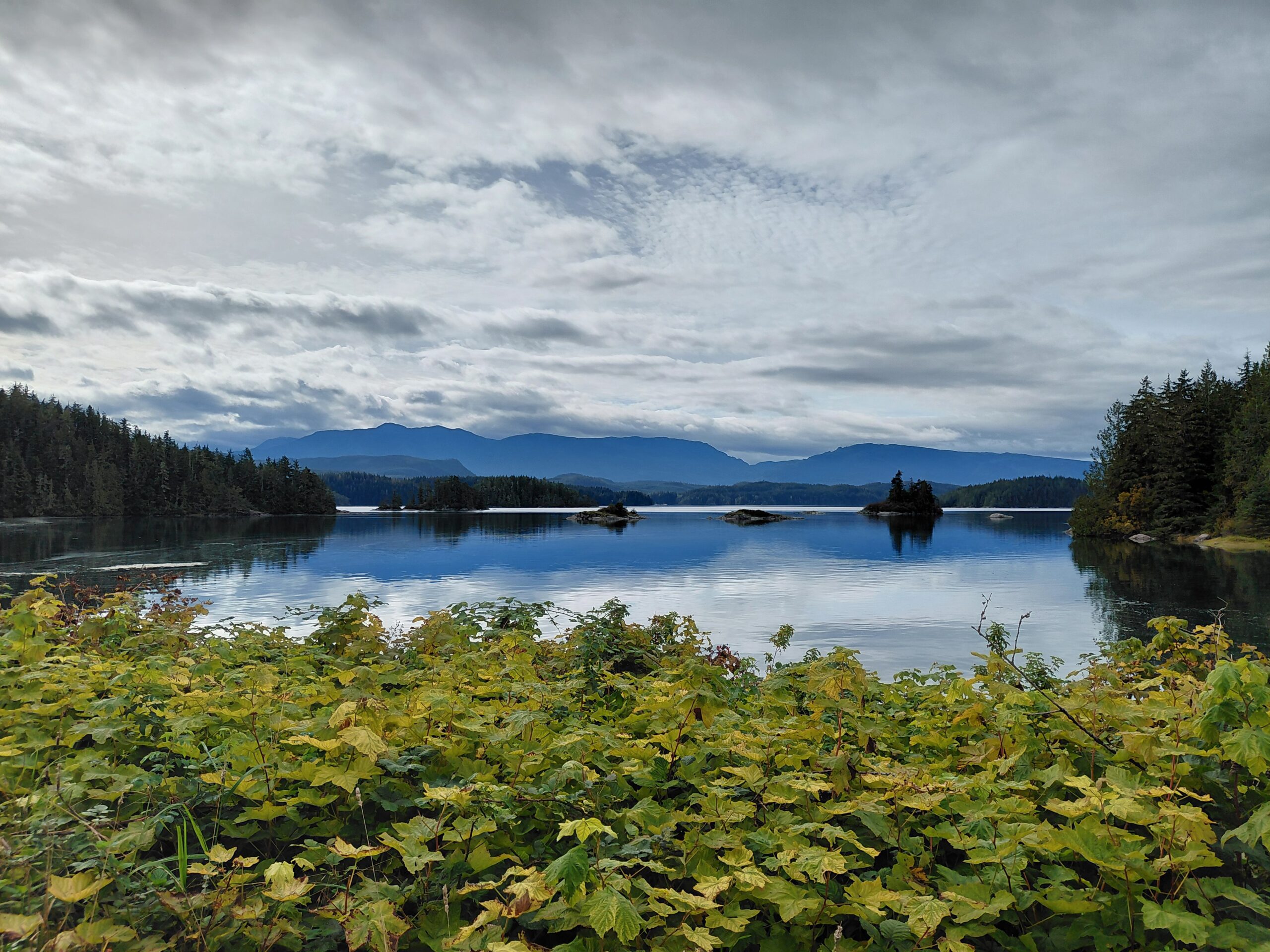
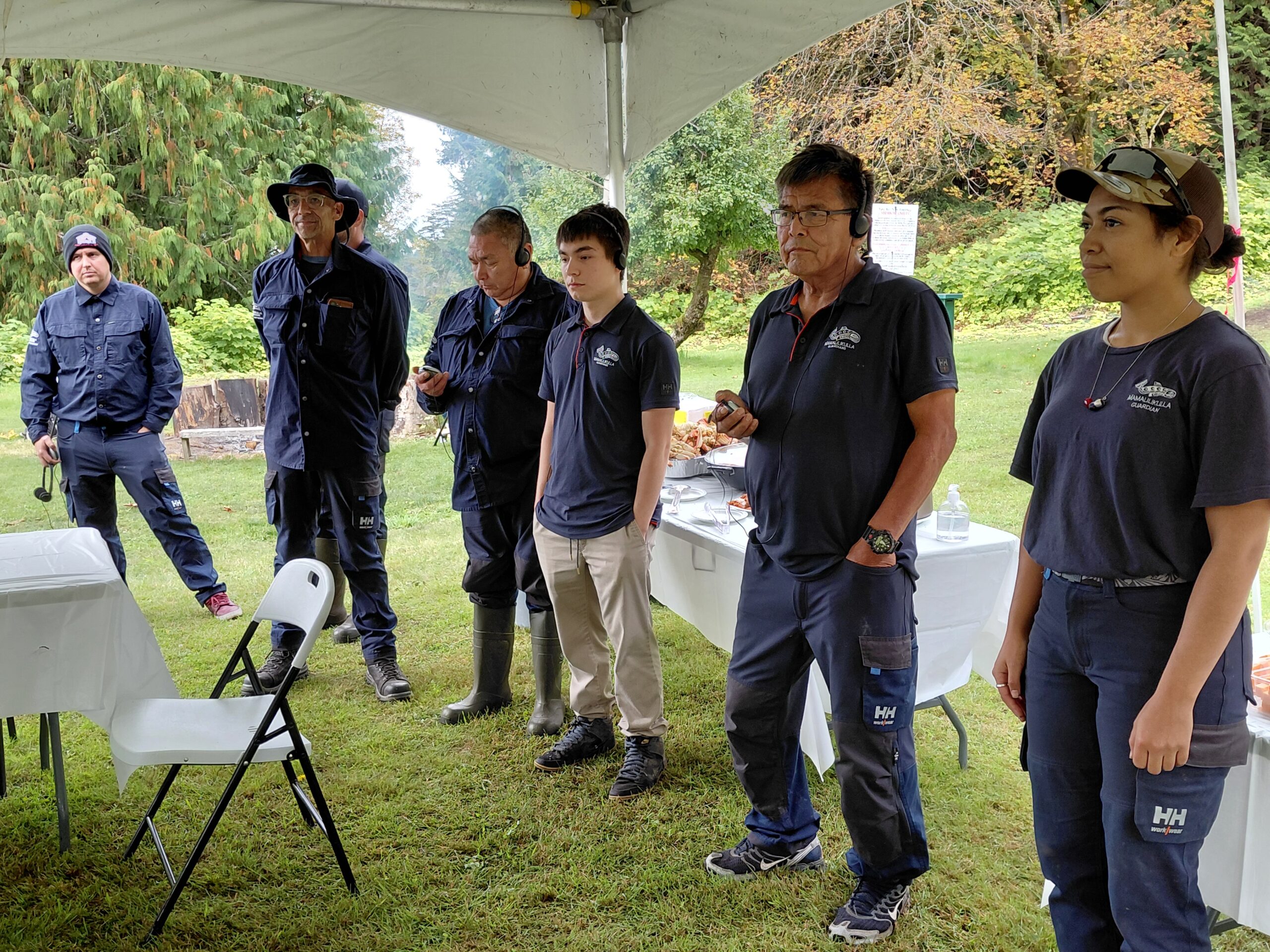
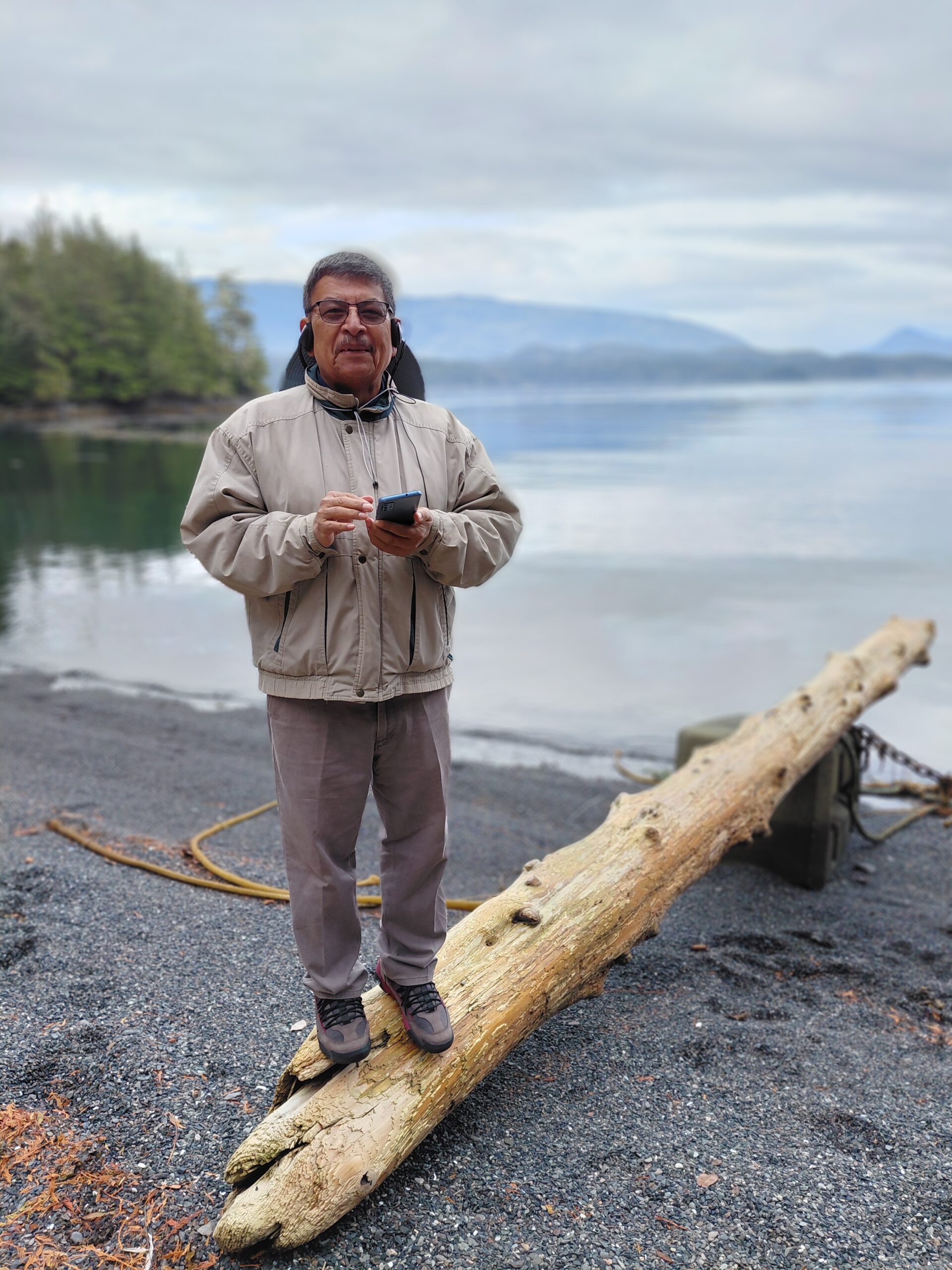
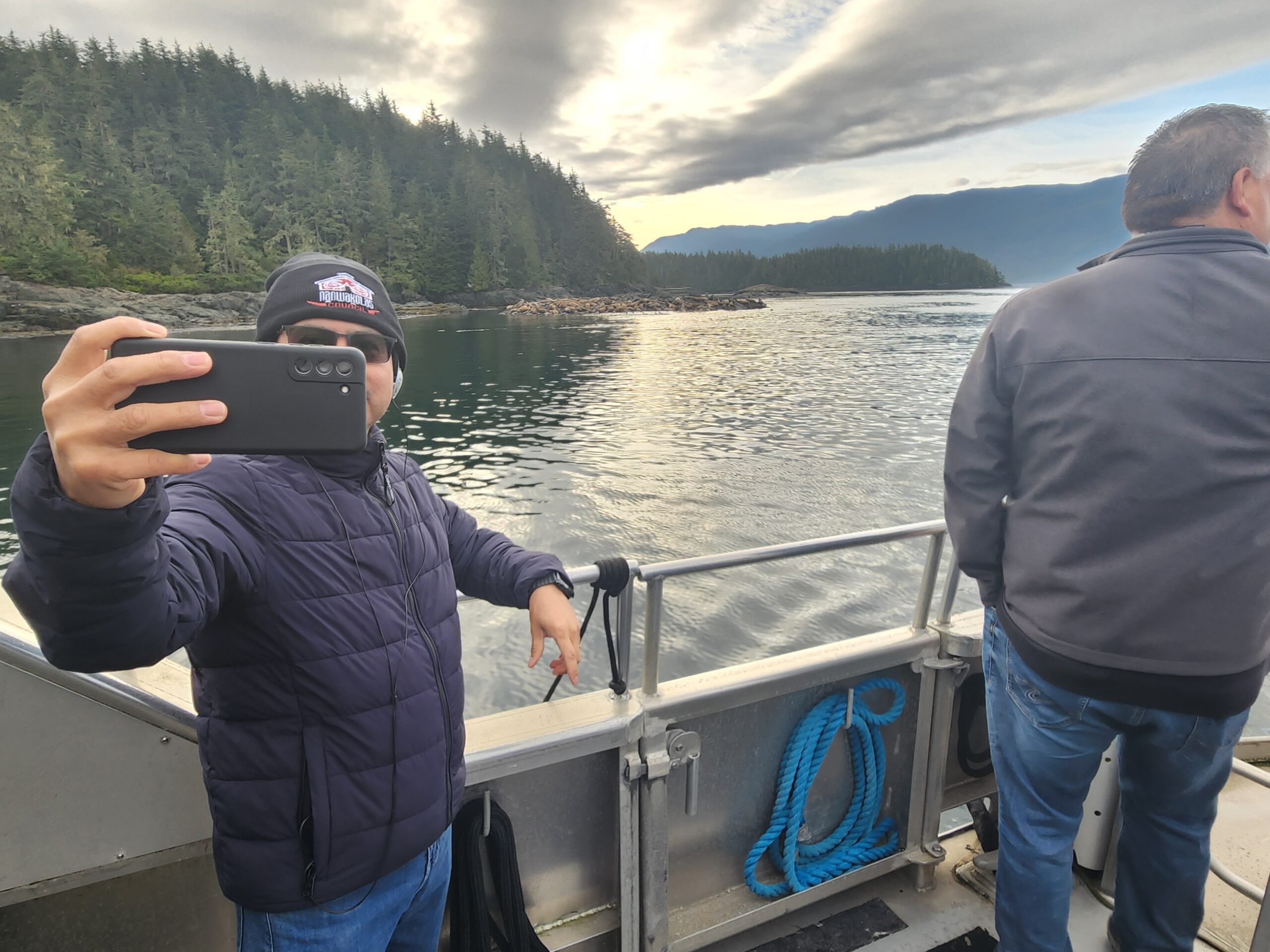
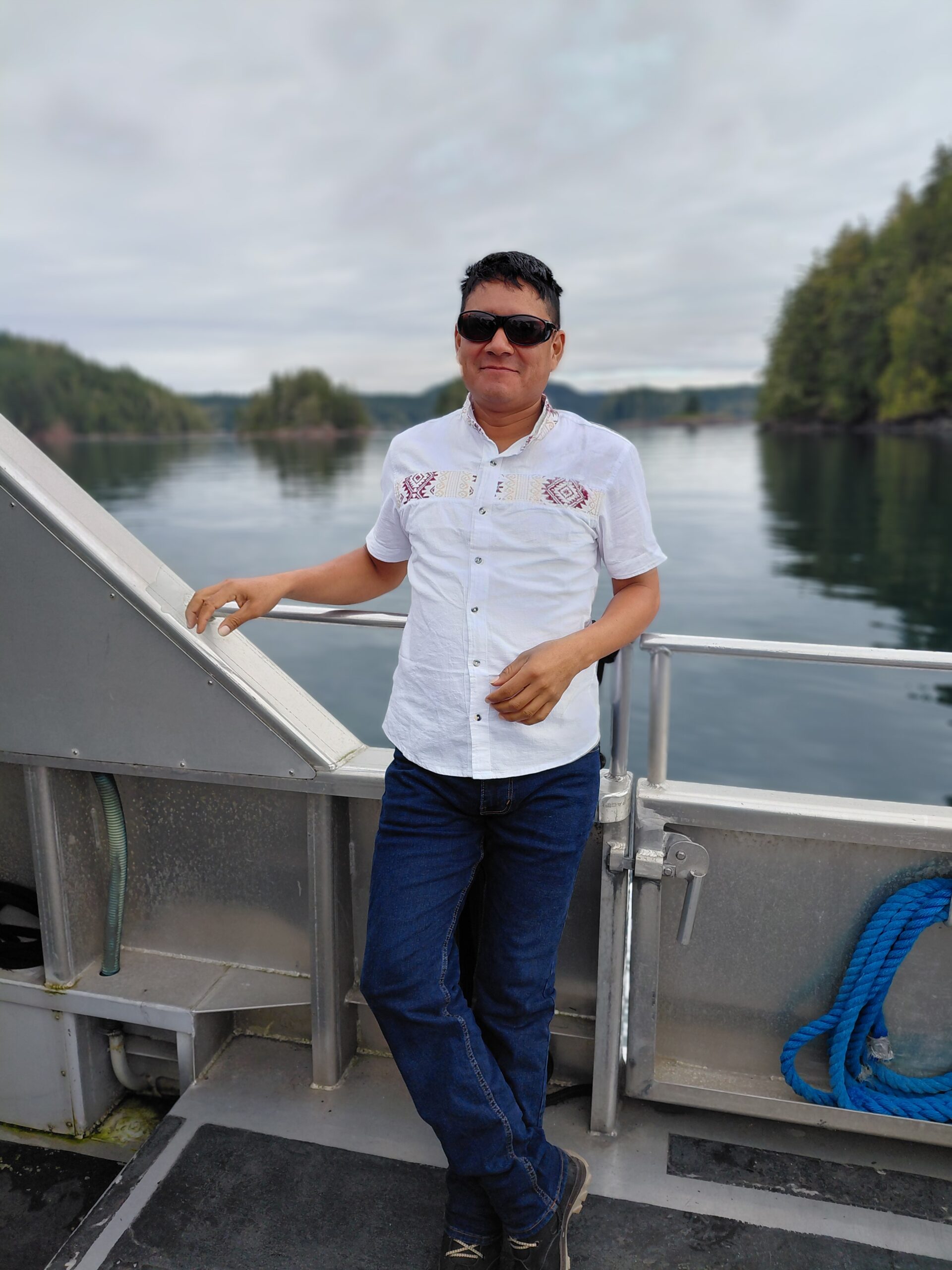
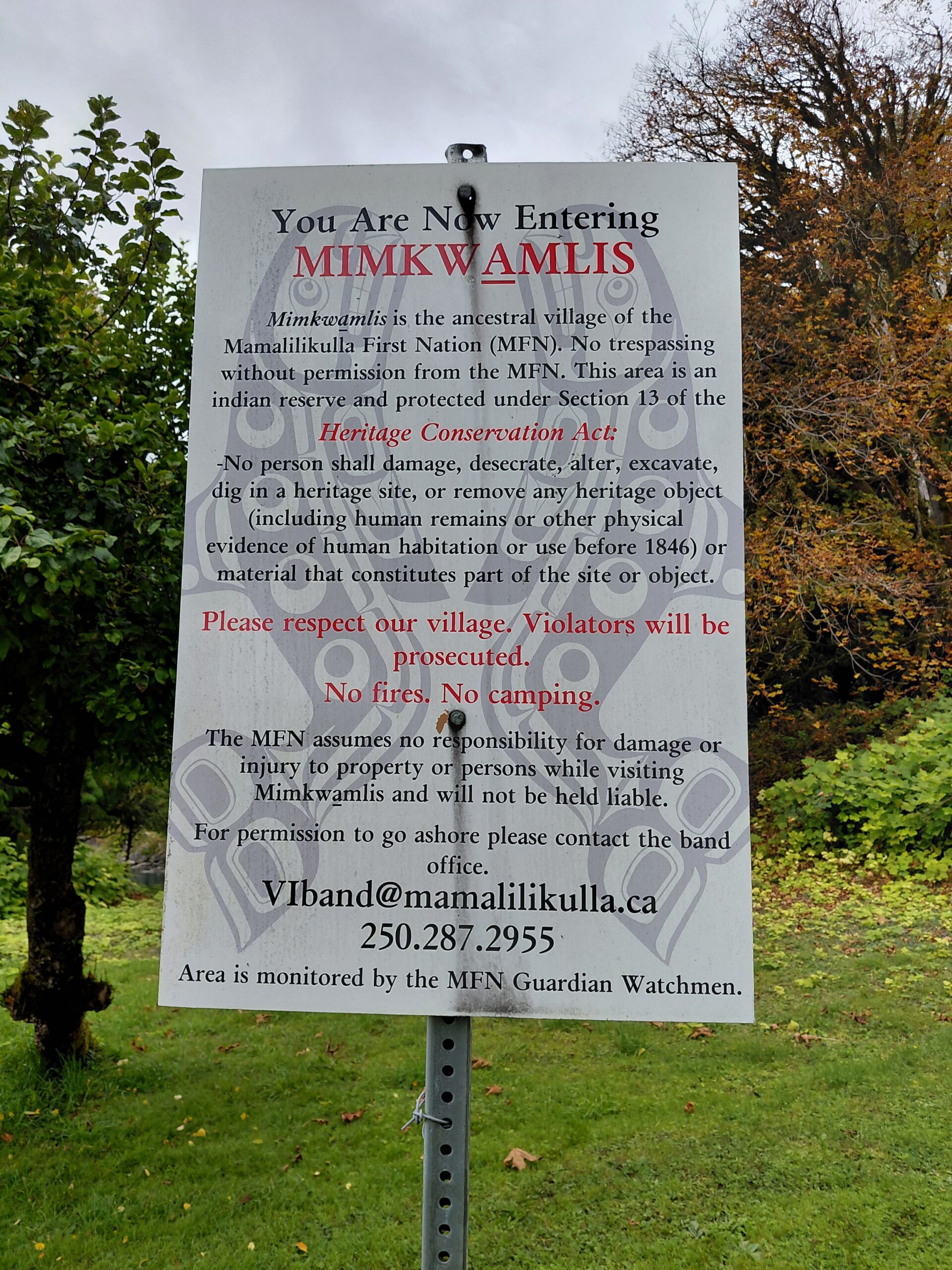
In October 2026, Mamalilikulla First Nation welcomed a delegation of Indigenous and environmental leaders from Guatemala and partner organization Nature United to Mamalilikulla territory in the Great Bear Sea. Everyone had come together to share knowledge, strengthen relationships, and learn from one another’s experiences in Indigenous governance, stewardship, conservation, territorial management, cultural revitalization, and community wellbeing. Supported by Nanwakolas Council, the visitors were able to witness firsthand the work of the Nation and its Guardians in protecting Mamalilikulla lands and waters.
“I have been dreaming about coming to this landscape for many years since I heard about the great projects and the great work of conservation that people have been doing here and this deep connection led by the First Nations,” said Sara Ortiz, Portfolio Manager Officer of The Nature Conservancy in Guatemala. “I’m so excited and so grateful, talking everybody who has been explaining their amazing work.”
An ambitious goal becoming reality: the Guatemalan PFP
Inspired by the establishment of Indigenous-led models of Project Finance for Permanence (PFPs) elsewhere in the world, the visitors are part of a group developing a PFP in Guatemala that they hope to achieve in 2027. There is much to learn from this region given the world’s first PFP model was created here in 2007 – when 27 First Nations working with philanthropic partners signed agreements with the governments of Canada and BC to establish a $120 million fund for conservation and economic development, managed by a new First Nations-led institution called Coast Funds. In 2024, First Nations achieved a second PFP, bringing $335 million in new capital to Coast Funds to support marine conservation and new economic opportunities in the Great Bear Sea.
In many ways similar to the goals of the Great Bear Rainforest PFP, the Guatemalan PFP has a long list of ambitious objectives that include ensuring that a significant portion of the country’s terrestrial and freshwater ecosystems are under effective protection; achieving meaningful reduction of deforestation; creating sustainable financing mechanisms to support long-term management of key protected areas; establishing new protected areas to improve connectivity between critical conservation zones while strengthening the local governance, administration
and sustainability of communal forests, and working with communities to co-create and scale sustainable and culturally beneficial livelihood solutions, such as the sale of sustainable forest products, agroforestry and ecotourism.
Also similar to experiences in the Great Bear region, our Guatemalan visitors told us that the long-term success of their PFP hinges on the leadership and active participation of Indigenous and local communities. These groups possess deep ecological knowledge, cultural insight, and a strong commitment to sustainable resource management. Their involvement ensures that conservation strategies are community-led and culturally grounded, resulting in long-lasting outcomes. Across the country, Indigenous groups, rural cooperatives, and community-based organizations are already driving sustainable practices in agriculture, forestry, ecotourism, and ecosystem restoration.
Learning from Experience
The delegation first spent two days in Vancouver, learning about Indigenous-led conservation, protected area co-management, and how Coast Funds has supported the PFPs for the Great Bear Rainforest and Sea, including the lessons that had been learned along the way and sharing their own story about developing their PFP in Guatemala.
On the third day of their visit, Nanwakolas Council hosted the group at Q ̓ ə pix ʔidaʔas, an Indigenous learning space at North Island College in Campbell River (Q ̓ ə pix ʔidaʔas translates to “gathering place” in Lik̓ʷala (Liq̓ʷala)). In addition to giving all the participants traditional Mayan greetings, each of the delegates shared their hopes for what they would learn from the visit. Dallas Smith, President of Nanwakolas Council, spoke to them at length about the history of the Great Bear Rainforest PFP and Coast Funds, and the work that went into establishing and implementing this impactful initiative. Nanwakolas staff offered insights into the marine and terrestrial work under way to support the goals of the First Nations. After lunch, everyone boarded a bus to head to Port McNeill and Mamalilikulla territory for the next two days.
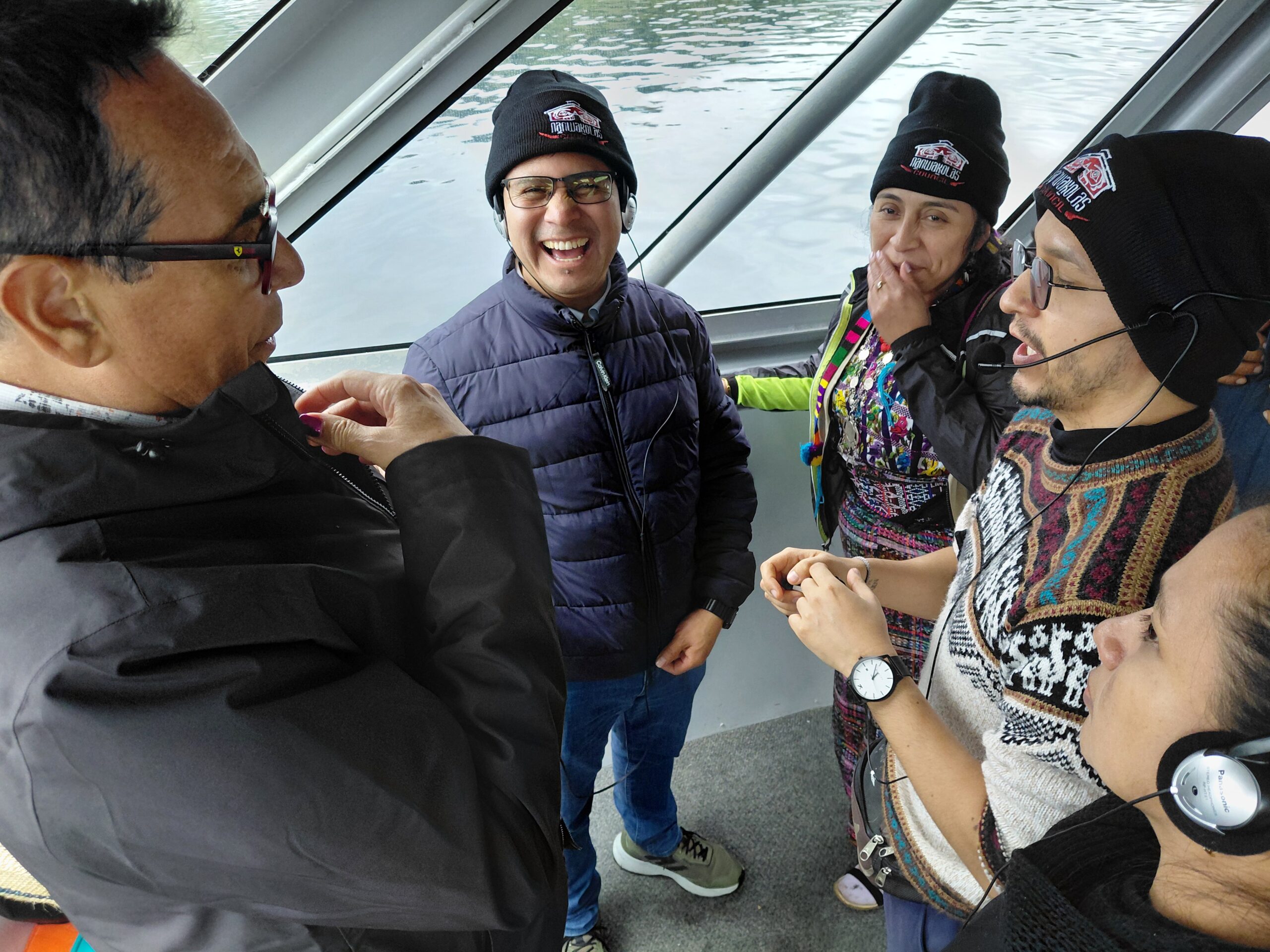
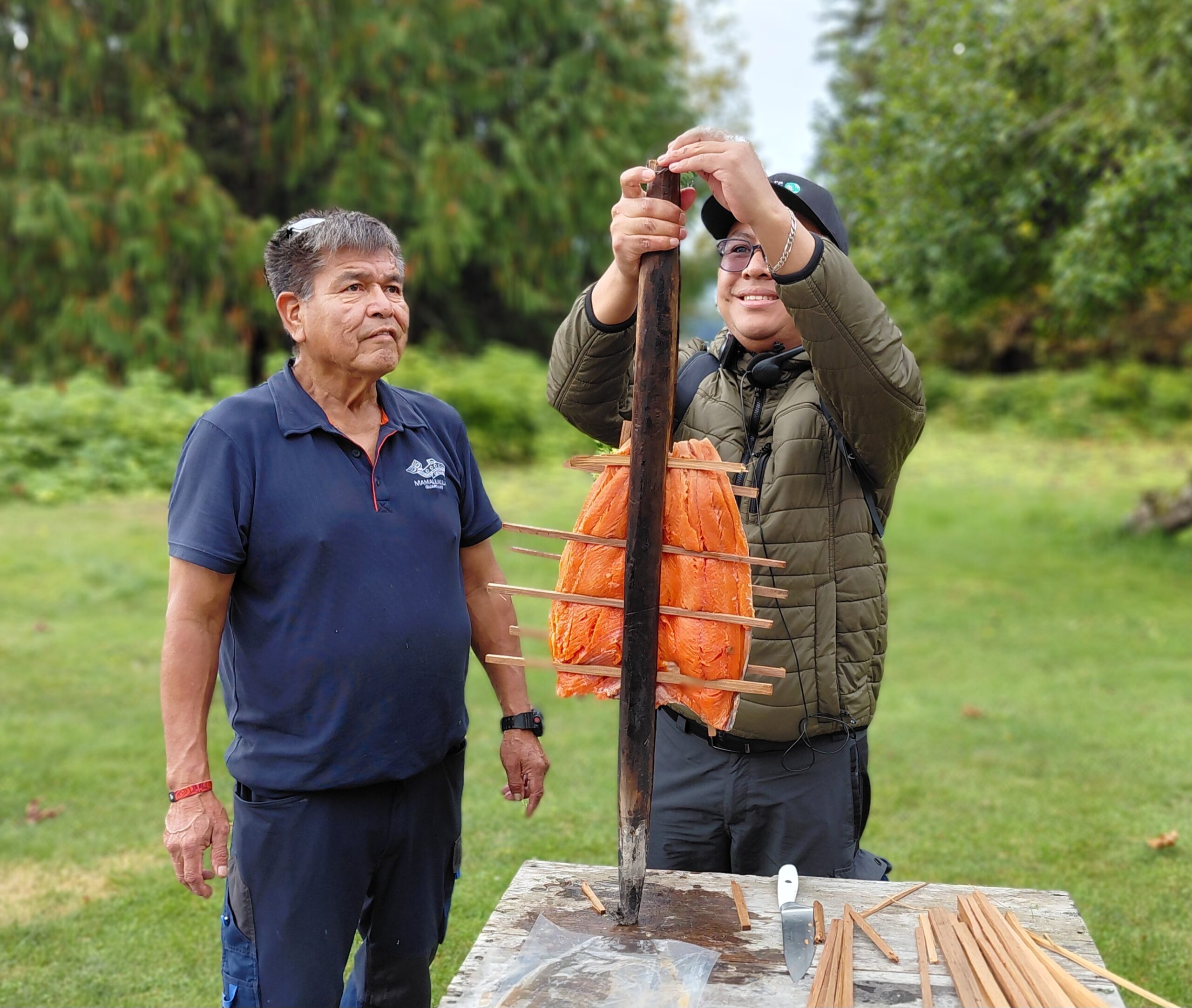
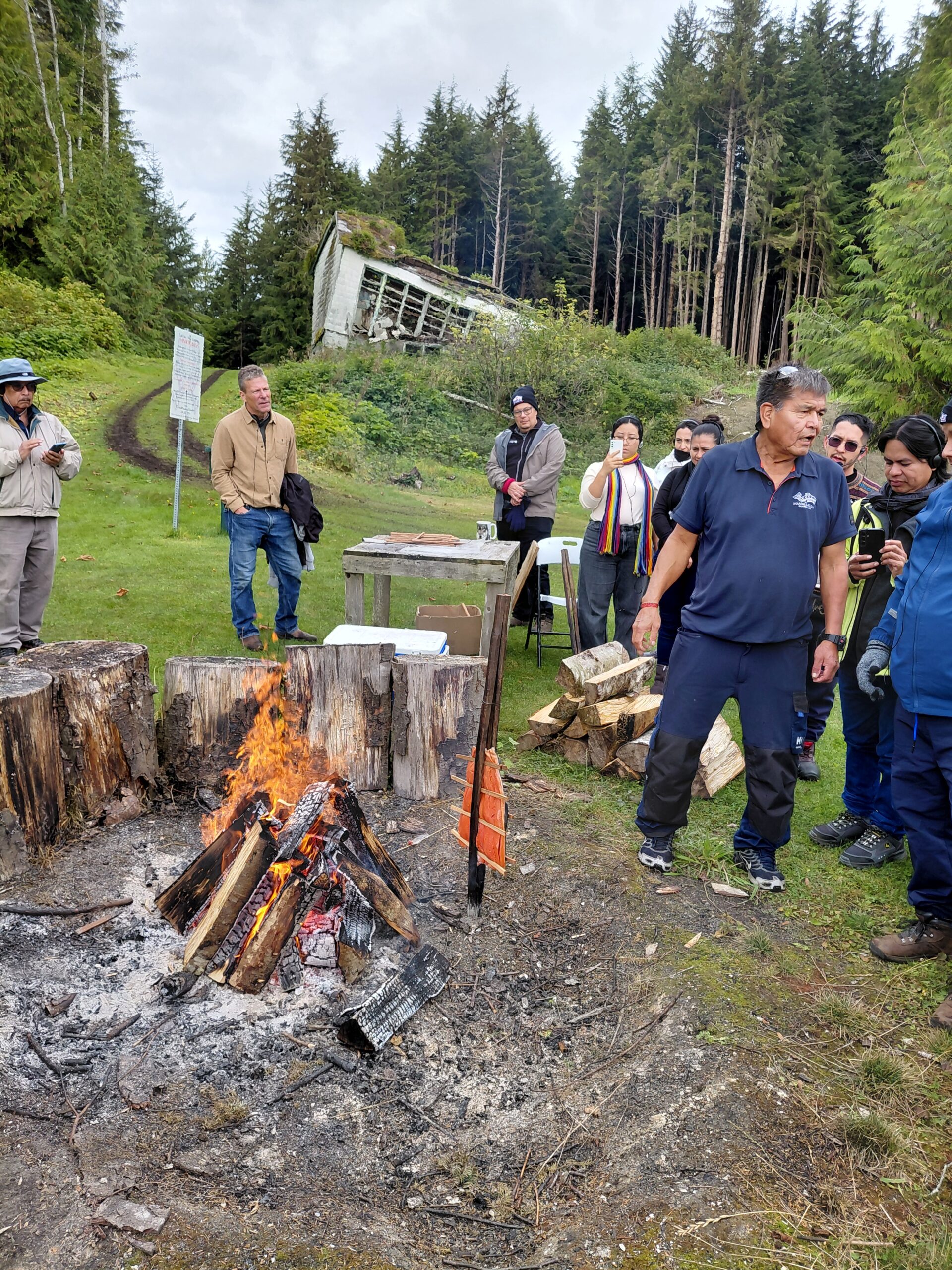
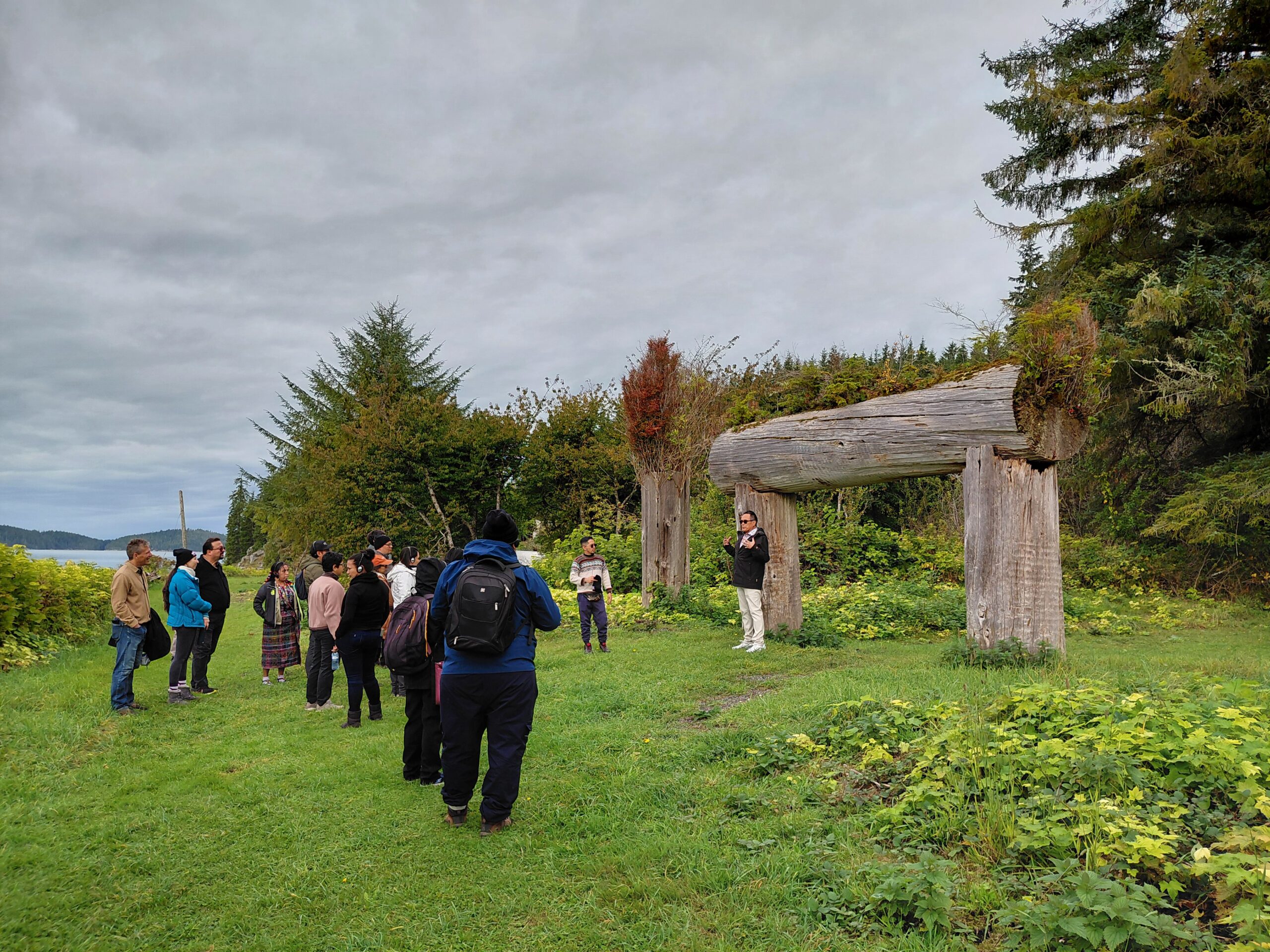
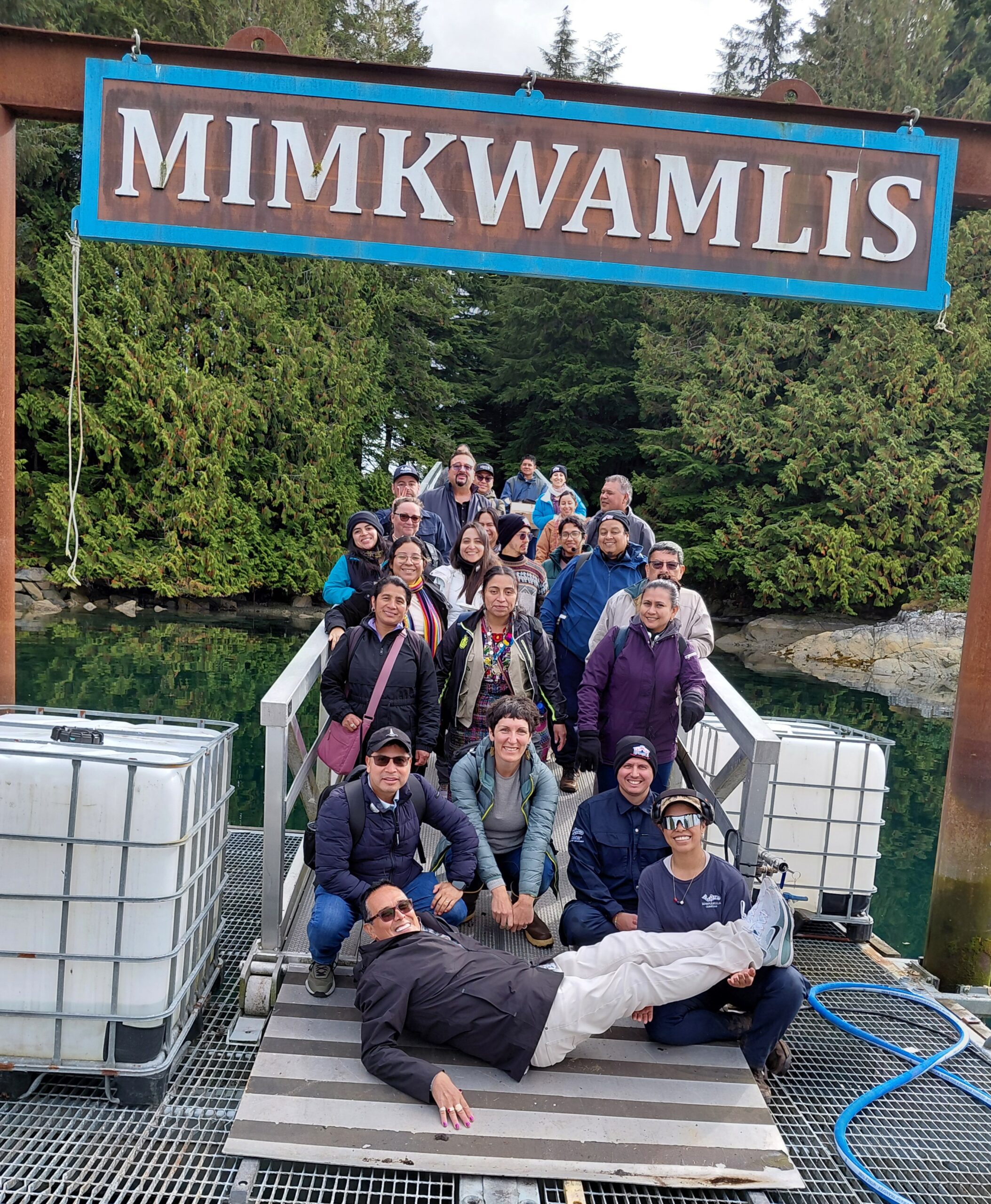
The group’s main hope was to gather hands-on information and exchange knowledge and ideas with Indigenous people and conservation practitioners who have worked with a PFP for nearly twenty years in practice. What they went home with was not only practical advice, but new friendships, heartfelt connections, and, as Sara Ortiz observed: “What we have seen here gives us hope. It’s an inspiration for us in Guatemala, because we are just starting but this has been happening here for a long time now. If we can do half, even a quarter of what you have accomplished here, that will mean a lot for everybody, especially the Indigenous Peoples and the future generations who would be able to take a look at nature and have this relationship with it as you have been able to.”
“This place is like a different world to my country, but I also see a world of opportunities by comparison to the challenges and struggles we have in Guatemala. With this potential, I see there is nothing we could not do,” added Reginaldo Reyes, Technical Coordinator of Fundación para la Conservación de los Recursos Naturales y Ambiente en Guatemala (FCG).
“This trip has been very important, not only because I got the chance to meet and learn from all the Indigenous people here,” said Francisco Xanté Lobos, Executive Director of Asociación de Desarrollo Productivo y de Servicios Tikonel. “This motivates me to keep working in my own territory and put into practice all that we have learned this week.”
A whale of a time
As we set out for the day from Port McNeill with Captains Bill and Donna Mackay on the Naiad, heading for ‘Mimkwa̱mlis on Village Island, there was one special wish on everyone’s minds: to see whales! For some of the visitors, it would be the first time.
They were not disappointed, as humpback after humpback whale surfaced both near and far to the Naiad and a pod of orca came by, greeting our visitors and providing plentiful photo opportunities. For Antonia, a Mayan woman from Guatemala’s interior, the experience was sheer bliss to recall even days later: “It was so exciting to see the whales! I screamed in excitement because I had never seen a whale in my life and there were so many of them!”
For Jorge Ruiz, Executive Sub-Secretary of Guatemala’s National Council of Protected Areas, it was also an incredible experience. “We have found that we are connected in so many ways between Guatemala and BC,” reflected Jorge. “And you know, some of these whales travel south to Central America each year, so that is another beautiful connection between us.”
It was just as meaningful for the hosts as it was for the visitors. “It’s easy to take it for granted when we’re out here, how beautiful it is, seeing the whales,” observed Brad Puglas, elected Mamalilikulla Councillor. “Some of our visitors had never seen them before. We see them all the time, but when we saw the expressions on their faces when they saw the whales, how excited they were, and their awe at our territory – it makes you really appreciate what we have here.”
For Mamalilikulla Stewardship Coordinator Chip Mountain, it was a great experience to meet people with his own level of enthusiasm for protecting their territories. “I really enjoyed meeting people from so far away that are wanting to do more for their people to be able to create areas of protection. I felt like the connection between our people, it was so easy. It was just like family. I hope that they’ll be able to take what they learned back and use it,” added Chip. “In the end I was just happy that other people share that desire to protect their territory and their communities.”
Connections for life and for the earth
Our last evening was spent breaking bread together and exchanging gifts, tears, promises of lifelong connections – and a heartfelt invitation to us to come to Guatemala and see in person what is being achieved there (watch this space!) – but most of all, sharing words of hope.
“We help each other by learning from each other,” Chief Powell told the room. “In the end, all humans are responsible for the earth. One thing you must never do,” he concluded, “is give up. Never give up, and never let anyone, least of all governments, say no to you. Just don’t accept that. You can do this.”
A wealth of experience
The delegation included Antonia Xuruc, Community Environmental System Director of Asociación de Cooperación para el Desarrollo Rural de Occidente CDRO, Francisco Xanté Lobos, Executive Director Asociación de Desarrollo Productivo y de Servicios Tikonel, Nelson Portillo, Community Leader of Sierra del Lacandón National Park, Petén, Andrea Archila, Project Coordinator of Mancomunidad de Municipios MancTzolojya, Rodimiro Lantán, General Coordinator of Asociación Coordinadora de Asociaciones y Comunidades para el Desarrollo Integral de la Región Ch’orti’ COMUNDICH, Adelaida Ramírez, Community Museum Director of Cooperativa Nuevo Horizonte, Reginaldo Reyes, Technical Coordinator of Fundación para la Conservación de los Recursos Naturales y Ambiente en Guatemala (FCG), Jorge Ruiz, Executive Sub-Secretary of Guatemala’s National Council of Protected Areas, Claudia Ramírez, Head of Financial Mechanisms of National Forestry Institute of Guatemala, Sara Ortiz, Portafolio Manager Officer, The Nature Conservancy, José David Díaz, Conservation Director, The Nature Conservancy, Diana Velásquez, Project and MEL Analyst, The Nature Conservancy, César Caté, Safeguards and ICLC Specialist, The Nature Conservancy, Vania Ramírez, President and Legal Representative of Asociación Gestión Integral de Vida AGIV, Ernesto Tzi, Director of Asociación Probienestar en Acción Sahaq Aach’ool Nimla K’aleb’aal -APROBA-SANK-, and María Pedro, General Manager of Asociación de Mujeres Eulalenses para el Desarrollo Integral Pixan Konob’ – AMEDIPK-.
Much gratitude to Sara Ortiz for assisting with translating interviews held in Spanish for this article, Jenn Burt of Nature United for her organizational skills and generosity, and to the Naiad captains for their care of everyone and making sure we all got to visit with orcas.
Gilakas’la to you all for sharing your time and experience with us!