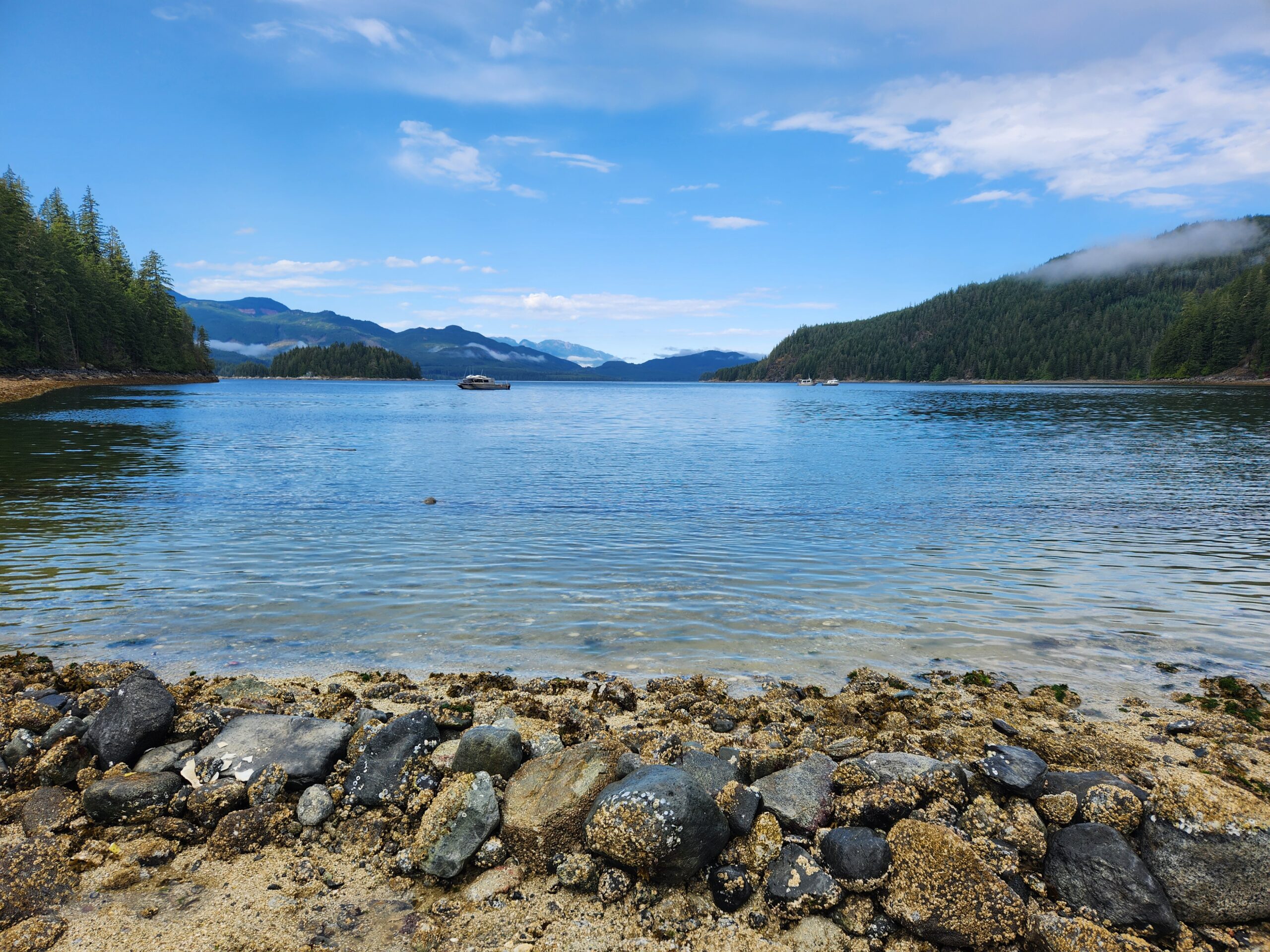
A case study for reflecting on BC’s Heritage Conservation Act (HCA), Heritage Conservation Act Transformation Project (HCATP), and provincial Archeology Branch procedures and policies
A recent report for the Ha-ma-yas Guardians authored by archaeologist Nicole Smith in collaboration with Nanwakolas Council uses loxiwe (clam gardens) as a case study to demonstrate how Indigenous Peoples’ experiences of their own cultural heritage and the Provincial government’s management of cultural heritage are aligned and misaligned in their worldviews and approaches to management.
Proposed changes to the HCA will help support the rights of First Nations on BC’s coast to undertake loxiwe restoration work, like the extensive efforts of some of the Nanwakolas Council member Nations to revitalize clam gardens on northern Quadra Island and near Mound Island. The report provides suggestions for how Indigenous worldviews could be better recognized in the pending changes to the HCA and processes related to cultural heritage management in BC. Some key worldview discrepancies include:
- The current version of the HCA treats clam gardens and other traditional use sites pre-dating 1846 as static historical objects, but for coastal Indigenous Peoples clam gardens are not relicts of the past. They are alive and they have been used continuously for at least 4000 years until the present day.
- The HCA also currently requires a permit to “alter” an archaeological site. The definition of ‘alter’ is narrow and inflexible in its application as it does not distinguish between alterations typical of construction and development and the cultural practices that gave rise to and are needed to care for a clam garden.
- The HCA and BC’s Archaeology Branch recognize the physical, tangible elements of cultural heritage sites predating 1846. Their focus is on material culture including objects and structures. Intangible cultural elements (such as Indigenous laws, knowledge, tending practices, spiritual connections, language, stories, songs and the broader cultural landscape) which are integral to the wellbeing of the clam garden and the Indigenous community, are not recognized or protected.
Hand in hand with the production of this invaluable report, Nicole Smith, along with members of the Clam Garden Network, have has also worked with Nanwakolas Council to produce a guide for any coastal First Nations wanting to undertake their own restoration work, called “Before You Add A Rock.”
Any questions? Please reach out! You can contact Scott Harris at ScottHarris@nanwakolas.com for more information.